Wednesday, January 6, 2016

La Befana e L'Epifania!

L'Epifania...tutte le feste porta via!

On January 6, the 3 Wise Men visited the baby Jesus paying him homage with gold, frankincense, and myrrh.  My Italian grandmother used to take down her Christmas tree calling it Little Christmas.  In Italy, The Epiphany signals the end of the Christmas season with a witch, La Befana (possibly a mispronunciation of L'Epifania).  Well, she's an old, ugly woman with old, tattered Roman clothes and broken shoes.  She rides around on her broomstick like a horse.  And the children have to be in bed when she arrives; she doesn't like to be seen or else the children will get coal.  She'll bring little toys, trains, dolls, mandarins, and other fruit to the children who were good and ash and coal to those who weren't.  But nowadays, there is a "coal" candy made from black sugar that parents will put in their child's stocking along with toys.

La Befana's story is entangled with the 3 Wise Men and has been celebrated at least since the 13th Century whereas Babbo Natale, Santa Claus, arrived in Italy in World War 2.  I've read that the 3 Wise Men had asked Befana to come along to pay homage to Baby Jesus but she was too busy cleaning or she was too heartbroken after losing a child.  Only later she changes her mind, follows the star, but arrives too late.  The Holy Family has already left for Egypt.  Then the gifts she had brought for Baby Jesus she then distributes to good little boys and girls around possibly still looking for Baby Jesus. 

But as Christianity started in the context of the Pagan Roman environment where many early Christian traditions were borrowed from them.  Historians believe that the legend may derive from the Sabine (a pre-Roman Italic tribe of central Italy) and later as adopted by the Romans, the  goddess Strina/Strenua.  She was a goddess of the New Year, purification, and well-being.  She safeguarded youth by providing health and strength.   Strina was an elderly goddess.


In Italy, children put out stockings for Befana on the evening of the 5th...and they also leave glasses of wine and cookies!   And when she leaves, she sweeps the floor behind her because she likes cleaning, and she may have also been a housekeeper.  And it may also signal sweeping away problems of the year.

While the holiday from work is nice as well as the stories and tradition of La Befana, what I really like the closure to the holiday.  Today is the day to relax, spend time with family and friends, and above all, put your Christmas decorations away.  The Christmas Season has, once again, ended.   

The next holiday:  Carnevale! 

But until then, Buona Befana!


Sources:  https://journeyingtothegoddess.wordpress.com/tag/strina/
http://www.stylecoven.com/post/14018623062/the-italian-christmas-witch-la-befana
https://en.wikipedia.org/wiki/Strenua
http://paganwiccan.about.com/od/yuletraditions/p/La-Befana.htm
http://carminesuperiore.blogspot.it/2009/01/la-befania-epiphany-twelfth-night.html

Tuesday, January 5, 2016

Poetry for Pizza


While reading an introduction of a B&B in Siracusa in Italian (Bed and Breakfast dei Viaggiatori, Viandandi e Sognatori, www.bedandbreakfastsicily.it), it struck me half way down the page that it was not only flowery but also romantic...something you would never see in the US in a description of a hotel.  But that's relfected throughout Italian culture, an emphasis and importance of style and presentation. 

While stopping over in Naples on my way back to Milan, I found a Tripadvisor and Google recommended pizzeria, a tiny hole in the wall that I almost missed, a few blocks from my hotel near Centrale (yes! for my 6:10am train), Pizzeria da Gaetano, via Casanova 109.    I got the DOP pizza with mozzarella bufala (from the Italian water buffalo), basil, and tomato, and it was good!  6.50€  Mac enjoyed it, too.  The wine was tasty as well, Rosso Rubino, Cantine Carannante, from Campania.

Near the end of my meal, I relaxed and studied the place better.  There were framed photos on the wall, maybe some certifications/authorizations from the city, and then....poetry.  About what?  What else:  how good Gaetano's pizza is in Neapolitan dialect.

Side note:  Gaetano comes from the Latin name, Caietanus, which meant "from Caieta" (a town) which is modern day Gaeta on the coast in Lazio.  The anglicized form is Cajetan.  

(Rough translations to be completed later)
To the Pizza
A beautiful pizza for all of this city, only Sir Gaetano knows how to do it. He seems to me to be a master, how much I love this meal while resting on my balcony singing this song:  Ta, fa, ca, tomatoes (?), ta fa ca, mozzarella, filled with marinara....and he does all of the flavors, and the rare ones, too, as you like, it bids you to eat, just prepared, put into the oven, and in 4 to 8 minutes a pizza is cooked and ready to serve!

Friends for...the Pizza!
A pizza is Gaetano's special song...I come to him, the genius, and I eat at almost any hour, so good, so flavorful, so succulent....I give you compliment!

To the Real Pizza
For you eating the pizza keeps your stomach healthy....you'll find a tasty and beautiful pizza...you can eat the rich capriccosa or for you he'll make what you prefer, and you can taste the beautiful margherita...


As I mentioned, this translation is in progress, in allestimento.  I'll update it later after getting some help on translating the Neapolitan.  Until then...what poetry would you write about your favorite pizzeria?  Or your favorite restaurant or food?


Tuesday, May 5, 2015

Expo Milan 2015

Go to the Expo!  As soon as you can.  Get there early and stay late, bring money to spend and wear comfortable walking shoes. And maybe expect a few lines.

Milanese have been excited as long as I have been here (since Feb 2011).  When I first heard about it, much to my embarrassment now, I imagined some kind of generic expo.  Chicago has a lot of them, ie, home and garden expos, pet expos, beauty expos, etc.  No, people, this is the World's Fair!  My grandfather went to the one in Chicago in 1933. Organizers changed the name from World's Fair to Expo in 1967 for the exhibition in Montreal and thus the name was given to Montreal's new baseball team, the Montreal Expos (which lasted until 2004 when they were moved to Washington DC and renamed the Washington Nationals.)

This is the universal expo.  The last one was 5 years ago in Shanghai, and in 2020 it'll be in Dubai.  They've already started construction.  The year's theme is food, Feeding the Planet, Energy for Life.  Italy is a perfect host country for this.  They bring food, its preparation, and respect for the digestion process to a whole new level.

There's been quite a bit of excitement and self-criticism leading up the Expo.  Journalism here isn't focused on reporting the facts.  Articles are more like editorials, opinion essays, or diatribes(a topic to be explored further in another post.) And most have been very critical of the Expo and its progress.  But the reality is it's beautiful and it's done.  The Nepal Pavilion was only half completed, but they just had a major earthquake.  That's understandable.  There's good security at the entrance and a lot of police and security patroling the venue and Rho-Fiera Milano Expo metro stop.  

You can compare it to an amusement park.  Each pavilion has a take on food or something surrounding food plus a plug on the county whether it's the history or culture.

First go into Pavilion 0 describing the evolution of food, farming, and society. 

And then the Expo is yours to see!


My favorite was the Austrian pavilion.  Their idea was clear on air.

I got annoyed at the exhibits where they didn't want me to exit from the same entrance right after entering, ie, Angola and The Vatican.  The Vatican let me got because I was already out of the building, but Angola made me walk up 4 flights of walk-ways to then climb down 4 flights of stairs just to exit.  

At the Brazilian exhibit, there's mesh netting to climb onto.   

I recommend the Caipirinha at the Brazilian pavilion; it's freshness is well worth the 10€.

I took a pass at the 7€ glasses of wine in Chile and Spain.  I liked the fresh beer on tap at the Czech Republic and German pavilions.  The lieberkase sandwich was good at the German pavilion also. 

Some of the exhibits didn't have English.  There should be at least English subtitles for Italian audio.

There were lines outside of Malaysia, Colombia, and Italy. South Korea escorted groups through, so there was a short wait.

Some of the pavilions started closing at 8pm, but a few stayed open later, ie Austria and the UK.  

At 9pm, there was a beautiful light, fountain and firework display at the Tree of Life. Don't miss it! Nor the German DJ!!


I can't wait to go back and see more pavilions.  I definitely want to see Israel; their patchwork crop siding was beautiful.  I want to see the Japanese pavilion, Switzerland's presentation on sustainability, and pretty much all the others that I missed which was about half of the countries. 

Getting there:  I took the red line from mmLotto.  If you have a monthly pass, you can add on the extention price of 1.60E.  If not, the ticket costs 2.50.  And with the monthly, if the exit is accesso libero, don't scan it!  You can keep it for the return trip! 

Have I whetted your apetite? I don't want to show too much to spoil the fun of discovery.  Is there anything else you that want to hear about? Let me know!

Happy Expoing!

Tuesday, March 4, 2014

Stare Bene vs. the Pursuit of Happiness

In Italy, when someone asks you, how are you? Come stai? It's a sincere question, how do you stay? Are you well?  I've seen Italians that I ask this pause, tilt their head and give me a look, like, wow, thank you for asking and caring how I'm staying.  In America, it's more of a greeting.  It's another kind of "Hello" or acknowledgement of your presence rather than a sincere inquiry on your status.  Whether you're having a good or bad day, typically the person asking, your co-workers, classmates, and the check out clerk at Walgreens, isn't sincerely interested on a full, in-depth analysis. He or she is just being friendly. 

And on top of that, how often do you stop to reflect on how you are?  Once a day? Once a week? Unless you make time for it, it's easy to not think about it and just stay focused on juggling various priorities which yields the shallow answer of fine, great, or good, thanks.

In Italy, staying well is something important.  With your friends or significant others, staying well with them is what's important.   Staying well alone with yourself is also important if not moreso. Ligabue sings about it in "Eri bellissima": "stai bene li con te?" "Are you well with yourself there?"  
And staying well with yourself through changes and new experiences is also important. One of my students explained to me that before studying abroad in America 20-some odd years ago, he broke up with his then girlfriend of 4 years because he wanted to be alone while embarking on this experience. To have the freedom and the space to change and grow personally.  He realized what was best for him and did it.

This idea of staying well with yourself lends to this external acknowledgement and objectivity of looking at the self.  I feel like Italians are able to step outside of themselves, not take themselves too seriously, and be self-aware.  One student described to me how he suffered as a child, and he was very matter of fact about it.   It's like an external, 360 degree analysis of self with acceptance.  That's how it is.  They're also able to step out and say, it's not a good moment in my life right now.  You would never say that in America.  People would look down on you because A-you're struggling, B-you showed weakness.

In America, what's important is doing well and being happy. Being happy with yourself, with your significant other, and with your job.  That's the goal.  I think the seeds for this present-day cultural goal of happiness were sown by Founding Father, Thomas Jefferson, when he declared that the pursuit of happiness as a right in the Declaration of Independence.  

But honestly, Tom, is this a destination that can be reached? And then what? Live happily ever after? For forever with no problems? Life is filled with never ending sorrows and joys. What about staying well?

Ultimately, pursuing happiness is a unachievable goal.  Happiness, however, can be found in the pursuit of goals. Perhaps a balanced update to this part of the Declaration would be the right to life, liberty, and the pursuit of goals while staying well.  Because what is reaching our goals without having stayed well?

Friday, February 21, 2014

Blues Brothers and Italy

February 21, 2014

Growing up in Chicago, you know the know the film, Blues Brothers. At least, that's how it was for me.  It was staple of my childhood.  My dad, my brother, and I would quote lines from the film.  I was a Blues Brother for Halloween when I was 12 years old.  It was a source of cultural pride.  The film shows some fantastic parts of Chicago, what it means to be a Chicagoan and from the Midwest.  At least, partially, what it means.  I had the film memorized.  

When I got my first apartment in Chicago, I was especially thrilled that my bathroom window overlooked the el (at the Paulina Brown line stop), just like the apartment in Blues Brothers, but just not as noisy.  At that time, I was working at a law firm and regularly went to the Daley Plaza, City Hall, and the County Building, all seen at the end of the film, to file, certify, and retrieve documents.  And later while working in radio sales, I often used Lower Wacker Drive to enter or exit the city.  (And movie aside, going to the Billy Goat, which Belushi and Aykroyd made famous with their Cheeseburger, Cheeseburger, no Coke, Pepsi SNL sketch, is a place you go to once in a while.  I don't really like their burgers, nor the chips, but I love going there.  It's a beautiful, little hole in the wall.  I adore Second City, too, the improv club where those guys made their start.)

After being here in Milan for a about a year, I had moments of homesickness.  So, you know what film I watched, that made everything feel better and the world seem right again:  Blues Brothers.  

Well, there's some sort of Blues Brothers cult following here.  About a week after watching it, I saw the Rocky Horror Picture Show live for the first time.  The two hosts at the beginning were dressed as the Blues Brothers and came out to their theme music.  Then I slowly began noticing it more and more everywhere.  Blue Brothers were used in advertising signs for a terrible, yet super cheap gym.  And when I tell people that I'm from Chicago, a common response is, oh, like the Blues Brothers.  I smile and nod, yes, yes.  

But tonight clinched it for me.  Nearing the end of the lesson, my 10 year old student and I had just started playing Go Fish.  I asked him what music he wanted to listen to.  He said, Blues.  Then he said, Blues Brothers.  I was taken aback.  Then he said, Everybody Needs Somebody.  My jaw hit the floor.  I pulled it up on YouTube, and in no time we were watching it.  And he sang along!  We didn't finish Go Fish.  We ended up watching other scenes from the film, and I turned it into a receptive language task on the present continuous.  

Watch out, Chicago.  Italy loves the Blues Brothers, too.


Kisses, Dating, and I Love You in Italian

September 2013 

Dating in Italy is different. No one asks, "what are we?" There's no exclusivity conversation.  It's just assumed that after 2 months hanging out together, meeting each other's friends, that you are a couple.  The only time it's talked about, with the "will you go out with me?" is in middle school.  I like it; it sends a clear message through actions.  That harks back to the cliche, actions speak louder than words.

Baci are kisses which you greet your friends and family with.  It's 2 kisses:  1 on the left cheek first, then 1 on the right cheek.  The Spanish greet also with kisses, but they start on the right cheek then go to the left cheek.  The Dutch greet with 3 kisses, left, right, then left.  It gets confusing at times depending on who you are talking to and where you are.

Now, often, friends will conclude an email with "Baci"  or "Baci e abbracci" (Kisses and hugs).  This is the normal salutation just sent electronically.  But if you are romantically involved with someone, I am told that you conclude the email with "Un Bacione" (a big kiss) and if you concluded it with "Baci" the other party would be taken aback.  Baci?  Baci are what you give your aunt.  But later I've seen emails from friends concluded with "Un bacione" and I don't know what to think.  An "abbracione" is a big hug.

In America, we say, I love you, to friends, lovers, boyfriends/girlfriends, mothers, fathers, children, etc.  The context you say it within is understood, and it's just one phrase.  The Italian have complexity, delicate layers, like that can be found with the millefoglie pastry or lasagna.   I've heard different explanations.  "Ti voglio bene" is used often.  It means I care about you.  You say it to you family, close friends, and even boyfriend/girlfriend and husband/wife.  "Ti amo" is reserved for more romantic, intimate relationships, but I don't think it's used very often.  "Mi piachi tu" doesn't really work or maybe it's said when to express a desire to escalate the relationship.


Friday, September 13, 2013

Inno: Soccer Team Song

Each team in Italy has an official song, an inno, and the fans listen to it.  It's not like a university fight song; it's more like a pop song, almost. They listen to it in their cars driving around.  It's interesting.

Here's Milan's song:  "Milan, Milan"


While I'm an Interista, I'm not a fan musically of their inno, "C'è Solo Inter."  It sounds like a Michael Bolton song or background music for a Sports Utility Vehicle TV commercial.  Where are the hands swaying with lighters?  But in all earnestness, the inspiration of the song is cool.  Peppino Prisco was the Vice President of Inter from 1963-2001.  He was asked once about having served under 5 different Presidents of Inter.  His response was, "Well, I always sought to serve only Inter."  He loved his team.


Here's Naple's inno, "Napoli."


Thursday, September 12, 2013

Amami! (Love me!) What?


If you stream RTL 102.5, Italian radio, (their app is great, by the way; they have an all Italian music web radio channel plus others), you might have heard this rousing anthem sung by Emma, "Amami."  I first thought it was someone's name (something close to Amelie) and didn't pay much attention to it until I noticed some Italian gals singing the chorus with fervor. Then later, after seeing the title on 102.5's app while it was on-air, I thought, "Ah ha!" The light went on, as what happens in the second language acquisition process. "Ama" is the informal imperative of love, amare, and "mi" is the pronoun referring to me.

So the next question in my analytical mind on the tram to an English lesson, is this "love me" in the sense of a command? Like stand up, sit down, love me, jump, etc? Or is this the exasperation of a woman who is pouring herself out desperately to a man who's just not that into her? Or perhaps is it her seizing a timely opportunity with someone she's cared about for a while but has lacked the courage or the circumstance or right words to allow for her express herself, so one day she just blurts out, "Amami" as some kind of pent up release. (Reminiscent of the pent up release  in Sense & Sensibility near the end with Emma Thompson).

I also wondered if this would make a good song for teaching imperatives if i ever go back to the States and teach Italian.

I remember in 1996 when Evita came out on film starring Madonna. The soundtrack is incredible; I think I know every song by heart. It's one of those press and play albums. My reaction to one of the songs on the album, "You Must Love Me" was, "Huh, you're ordering this man to love you on your command? That's not how love works." It's a modal giving an obligation in one sense.  It was only after watching the film did I gain the understanding and better appreciate the context. Juan Peron's done all these nice things for Eva. She was a bastard daughter raised in poverty who was refused from attending her own father's funeral and shown many hardships. She then concludes about Peron, you've done all these nice things for me, and now, sick with cancer, you're still by my side, therefore you must love me.  
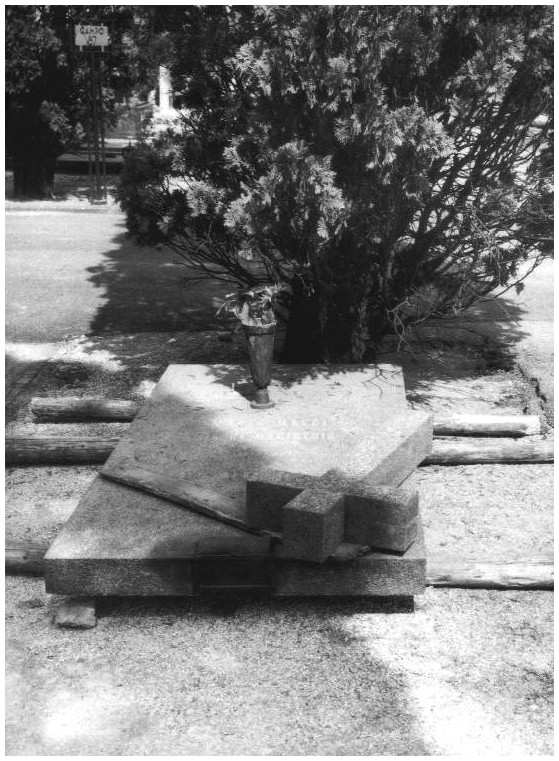
Eva's headstone under the false name.

A memorial marker placed in July 2005.
Incidentally, Eva's body was buried in Milan for a while. After the military coup removed Peron from power in 1955, they removed her body from display and kept it hidden in government offices. But somehow candles and flowers would turn up on it. So in 1957, they moved her body Cimitero Maggiore di Milano where she was buried under a false name, Maria Maggi de Magistris, and stayed for about 15 years.  Here's the  article from the BBC on Eva's post-mortem travels.

[And on another tangent, Eva died at the age of 33 from cervical cancer which is caused by an STD, HPV, which goes through condoms. She ought to be associated with the educational outreach for this disease.  80% of American women will have been infected by HPV by the age of 50. It's one of the slow growing cancers that can be caught with an annual pap smear. A distant relative of mine died from it later in life.  That's the challenge with this disease; it can't be caught if you don't get your annual pap smear. It doesn't matter if you've been married to the same guy for 10 years or are a widow in her 60s or 70s.  The end of my Public Health Service Announement.]

Language is fascinating and fluid in so many ways; context and nuance change everything. Imparami (learn me!) to its students, does it sing.

Update: September 12
Maybe the answer which I seek will be found after I translate the song and discover the context. :)  I think the song is love me is in the romantic sense of pour your love on me, lay all your love on me.  She talks about love me like the summer rain covers the earth, like a lighthouse sends light into the sea, etc.


Wednesday, May 8, 2013

Receding Waves in Cogoleto


The waves receding back into the sea in Cogoleto sound different compared to any other that I have heard before.  Like pachinko balls clinking together after winning a small pot.  Or several marbles colliding.  The sound made when you're when sipping out the last bit of soda.

The source of this sound:  the stones.  The beaches here are made of pebbles.  If you find any sand, it’s been imported. 

So when you visit Cogoleto, listen to the sound of the water rushing over the stones.  You're in for an auditory adventure.

Sunday, January 13, 2013

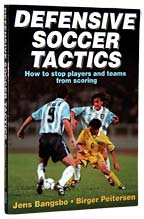
Everything I need to know in life I learned from Soccer


Anticipating others' moves.
Playing defense requires you to anticipate the moves of the offensive player so you can effectively stop him.   And you can’t play the ball---you’ll be tricked.  Every time.  Nor can you follow the player’s feet.  You have to watch the player’s hips.  Being aware of the other offensive players helps, but the goal is to defend the forward away from the goal towards the sidelines.  It’s being aware of their body language and anticipating their moves.  This is what helped me be a better driver.  You need to anticipate other drivers, especially when merging onto the Kennedy Expressway.  Are they accelerating, is there another car in front of them, does it seem like they might want to pass or switch lanes to get around, are they trying to exit the highway?  Then once you become familiar with the traffic patterns, you can anticipate the most frequented exits and moves other drivers will make.

Creating space.
This is important during the game to allow movement of the ball.  You can’t be standing still during the game.  Nor next to your teammate.  You have to get open—get square so they can pass the ball to you.  You have to know your strengths and weaknesses as well as those of your teammates so that you can play synergistically.  And ultimately, by creating space and passing, the balance of the power in the game changes.  I find this to be true in life with any kind of relationship.  You have to create space around yourself, to know yourself, to be able to handle yourself and, in turn, give space to those people so they can know themselves.  But at the same time, you move together be open with the goal of working synergistically.  There is no movement without space.  When someone is in your space, it stops your own personal movement and the movement of the team. 

Dirty Dancing.
Remember the scene in Dirty Dancing where Patrick Swayze is teaching Jennifer Gray how to dance?  He corrects her, maintain your space.  "Look spaghetti arms.  This is my dance space.  This is your dance space.  I don't go into yours.  You don't go into mine.  You gotta hold the frame."  Creating space and maintaining it is important in this game and dance of life.  It’s counter-intuitive—you think you want somebody in your life, that you have to go to them.  Don’t get me wrong; there are times you will have to go to that person, but there needs to be a balance.  The ebb and flow of life.  And by creating space, you are allowing things to enter your life.  Whether it’s getting rid of the clutter and maintaining a simpler and structured living environment, or eliminating draining relationships—a negative friend or a man who doesn’t want what you want.  How can you possibly grow, develop new interests, or meet new people if there isn’t any space for it?

Wednesday, December 19, 2012

Love, part deux: bambini

The Importance of Love, part deux:

There's a high respect and importance placed on children and the love of children here.  I was impressed when one of my male friends described to me the joy that a baby brings into your life.  And you can see the manifestation of that joy everyday by the crowds of mothers, grandmothers, or nannies waiting outside of schools to pick up their children.  In the pleasure the mother has in pulling her child's schoolbag on wheels while the offspring contentedly eats a snack or talks about the day.  A grandmother bringing her grandchildren on the bus, allowing them validate the tickets and coaching them on proper etiquette, "say excuse me."

And to some extent, importance of love for children is codified.  One of my friend's job offers was rescinded after her employer found out that she was pregnant.  Illegal in the US, absolutely, but now she is a content stay-at-home, proud mother of two.  Boh.

Tuesday, December 11, 2012

The Importance of Love


A cross stitch pattern informed me when I was 8 years old that "Love makes life more bearable."  Fast forward 26 years, the quote on this piece, still unfinished, rings true.

On Sunday, I went to the L'Artigiano in Fiera (Italian food and craft festival at Milan's expo center).  In the Campania section of the expo (the region where my great-grandmother was born), an acoustic guitar duo began to play a song at the booth next to where I actively searching for the best meloncello to bring home to a few friends and family.  A small crowd began to gather and grow, almost like iron filings to a magnet.  The tune was catchy.  I soon stopped sampling and started tapping my foot and singing along with the others during the chorus, "oje vita, oje vita mia."
Properly called " 'O Surdato 'Nnammurato", A Soldier in Love," this heart-warming song was penned in 1915 during World War 1 in Neapolitan dialect.  (The lyrics are below).  The passion this soldier has for his love and his pining for her really comes through.  My heart swooned when I heard Bocelli perform this.  And just seeing the gusto of the song being sung in the 1957 film, La Canzone del Destino, fills your heart.  Although Bocelli's rendition is popular, Anna Magnani's performance in the 1971 film, La Sciantosa,  is well-known, and it's also the name of the 1983 musical comedy directed by Nini Grassia.  But above all, I think this song encapsulates a key insight to Italy:  the importance of love.

Love is something to be inquired on, supported, and celebrated.  Everyone from taxi drivers to market vendors to building supers will inquire on your status.  On the cab ride to Centrale in order to catch a bus to the airport to go to Paris, I made the mistake of responding to his question whether I was visiting my boyfriend by saying let's hope I can meet a boy.  Then a whole deluge of questions followed, what?  You don't have a boyfriend?  No.  Then I went into make-up-a-story-about-past-loves-or-current-crushes mode.  But there is a fine line to walk though.  Once, I was approached after Italian class while unlocking my bike.  This man dressed in a proper African attire asked me if I was a White African because the colors I was wearing reminded him of colors he would see back in his home country of Cameroon.  No, I'm not from Africa.  Then he asked me if I was married.  I was ready for this question: yes, yes, I'm married.  I thought this would halt all conversation.  My get-out-jail free card. Nope.  Then he asked me if I had kids.  Oh, no--I wasn't ready for this question.  No, we don't have kids yet.  Panic began to sink in.  A pit in my stomach.  Then he wanted to give me a pair of these miniature glass turtles which I could put in our window facing a certain way to help our fertility and help my imaginary husband and I get pregnant.  He put the turtles into my hands and asked for a donation for some children in Africa. I kindly refused that I had no money on me, which was literally the truth.  While it didn't work here, this approach does work with the Egyptian vendors at the markets.  You can get away with making up an imaginary husband or boyfriend without having to delve into talk of imaginary children. I had been asked out for coffee too many times before employing this tactic, because no, it's not possible that you came to Italy alone.  Which is the case for a lot of people that I've met, both male and female, who, in fact, came to Italy for love.   I did come for love...for love of Italy.


Love is a central theme and is the seemingly all-important quest in many Italian movies.  It's this cultural assumption, group collective goal to be reached.  

You turn the radio on, and the song is mostly likely going to be a love ballad.

While all is fair in love and war, Italian singer, Tiziano Ferro, says that "l'amore e' una cosa semplice."  Love is something simple.  And I wonder if in times of distress, such as in war, are we forced to boil things down, simplify and prioritize better to realize what is in fact important to us?  And maybe are Italians just more honest with themselves and in touch with that facet?  

It is in these hardships, in fact, where love comes into play and makes them more bearable.

Italy is a country of love in diverse ways.  From romantic love to love of family and friends.  Love of children, pets, the beach, the mountains, fresh air, and flavorful food...and of great importance to many in Italy...love of your football team.  It is, but, how to live.  So what song do you think Naples supporters sing at the end of a victory?  Yup, you guessed it! This is from the end of a match against Chelsea, 21 Feb 2012; Naples won 3-1.  The entire stadium is singing it.  That's love.


'O surdato 'nnammurato                 English translation:


O SURDATO 'NAMMURATO                                  THE SOLDIER IN LOVE
Enrico Cannio

Staje luntana da stu core,                                      
Though you are far away,
a te volo cu 'o penziero:                                          
I fly to you in thought.
niente voglio e niente spero                                    
No wish, no hope have I
ca tenerte sempe a fianco a me!                             
save to keep you near me forever!
Si' sicura 'e chist'ammore                                    
My heart, as you know, is yours alone,
comm'i' só' sicuro 'e te...                                        
and I know yours is mine.

Oje vita, oje vita mia...                                           
Oh life, oh my life,                      
oje core 'e chistu core...                                        oh heart of this heart,
si' stata 'o primmo ammore...                                 
you have been my first love...
e 'o primmo e ll'ùltimo sarraje pe' me!                      
the first and the last you'll be for me!

Quanta notte nun te veco,                                
For how many nights have I not seen you,
nun te sento 'int'a sti bbracce,                                nor held you in my arms,
nun te vaso chesta faccia,                                     
nor kissed your face,
nun t'astregno forte 'mbraccio a me?                       
nor pressed you to my breast?
Ma, scetánneme 'a sti suonne,                               
I wake from dreams like these
mme faje chiagnere pe' te...                                    
and cry for you.

Oje vita, oje vita mia...                                          
Oh life, oh my life,
oje core 'e chistu core...                                       
oh heart of this heart,
si' stata 'o primmo ammore...                                
you have been my first love...
e 'o primmo e ll'ùltimo sarraje pe' me!                     
the first and the last you'll be for me!

Scrive sempe e sta' cuntenta:                               
Write ever and be happy:
io nun pienzo che a te sola...                                
I can only think of you...
Nu penziero mme cunzola,                                   
One thought comforts me,
ca tu pienze sulamente a me...                             
you only think of me ...
'A cchiù bella 'e tutt' 'e bbelle,                               
The most beautiful woman in the world,
nun è maje cchiù bella 'e te!                                  
is never more beautiful than you!

Oje vita, oje vita mia...                                          
Oh life, oh my life,
oje core 'e chistu core...                                       
oh heart of this heart,
si' stata 'o primmo ammore...                                
you have been my first love...
e 'o primmo e ll'ùltimo sarraje pe' me!                     
the first and the last you'll be for me!
Translations from youtube and wikipedia.