 If you stream RTL 102.5, Italian radio, (their app is great, by the way; they have an all Italian music web radio channel plus others), you might have heard this rousing anthem sung by Emma, "Amami." I first thought it was someone's name (something close to Amelie) and didn't pay much attention to it until I noticed some Italian gals singing the chorus with fervor. Then later, after seeing the title on 102.5's app while it was on-air, I thought, "Ah ha!" The light went on, as what happens in the second language acquisition process. "Ama" is the informal imperative of love, amare, and "mi" is the pronoun referring to me.
So the next question in my analytical mind on the tram to an English lesson, is this "love me" in the sense of a command? Like stand up, sit down, love me, jump, etc? Or is this the exasperation of a woman who is pouring herself out desperately to a man who's just not that into her? Or perhaps is it her seizing a timely opportunity with someone she's cared about for a while but has lacked the courage or the circumstance or right words to allow for her express herself, so one day she just blurts out, "Amami" as some kind of pent up release. (Reminiscent of the pent up release in Sense & Sensibility near the end with Emma Thompson).
 I also wondered if this would make a good song for teaching imperatives if i ever go back to the States and teach Italian.
Incidentally, Eva's body was buried in Milan for a while. After the military coup removed Peron from power in 1955, they removed her body from display and kept it hidden in government offices. But somehow candles and flowers would turn up on it. So in 1957, they moved her body Cimitero Maggiore di Milano where she was buried under a false name, Maria Maggi de Magistris, and stayed for about 15 years. Here's the article from the BBC on Eva's post-mortem travels.
[And on another tangent, Eva died at the age of 33 from cervical cancer which is caused by an STD, HPV, which goes through condoms. She ought to be associated with the educational outreach for this disease. 80% of American women will have been infected by HPV by the age of 50. It's one of the slow growing cancers that can be caught with an annual pap smear. A distant relative of mine died from it later in life. That's the challenge with this disease; it can't be caught if you don't get your annual pap smear. It doesn't matter if you've been married to the same guy for 10 years or are a widow in her 60s or 70s. The end of my Public Health Service Announement.]
 I also wondered if this would make a good song for teaching imperatives if i ever go back to the States and teach Italian.
I remember in 1996 when Evita came out on film starring Madonna. The soundtrack is incredible; I think I know every song by heart. It's one of those press and play albums. My reaction to one of the songs on the album, "You Must Love Me" was, "Huh, you're ordering this man to love you on your command? That's not how love works." It's a modal giving an obligation in one sense. It was only after watching the film did I gain the understanding and better appreciate the context. Juan Peron's done all these nice things for Eva. She was a bastard daughter raised in poverty who was refused from attending her own father's funeral and shown many hardships. She then concludes about Peron, you've done all these nice things for me, and now, sick with cancer, you're still by my side, therefore you must love me.
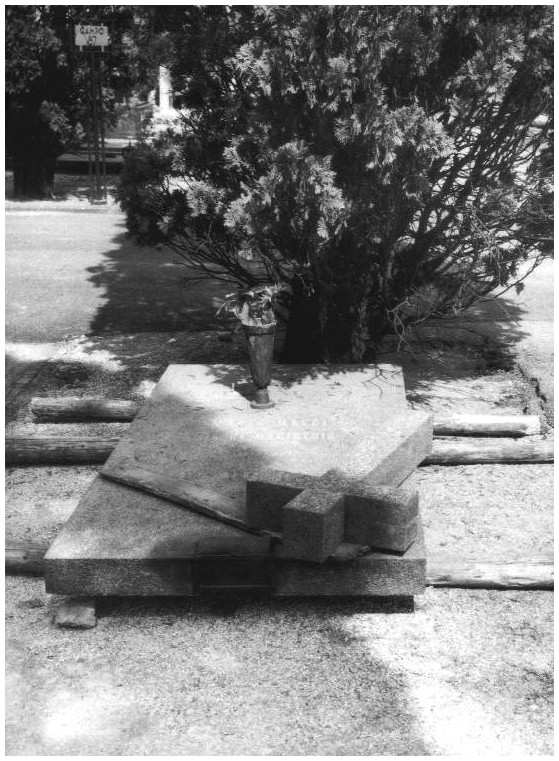 |
| Eva's headstone under the false name. |
 |
| A memorial marker placed in July 2005. |
[And on another tangent, Eva died at the age of 33 from cervical cancer which is caused by an STD, HPV, which goes through condoms. She ought to be associated with the educational outreach for this disease. 80% of American women will have been infected by HPV by the age of 50. It's one of the slow growing cancers that can be caught with an annual pap smear. A distant relative of mine died from it later in life. That's the challenge with this disease; it can't be caught if you don't get your annual pap smear. It doesn't matter if you've been married to the same guy for 10 years or are a widow in her 60s or 70s. The end of my Public Health Service Announement.]
Language is fascinating and fluid in so many ways; context and nuance change everything. Imparami (learn me!) to its students, does it sing.
Update: September 12
Maybe the answer which I seek will be found after I translate the song and discover the context. :) I think the song is love me is in the romantic sense of pour your love on me, lay all your love on me. She talks about love me like the summer rain covers the earth, like a lighthouse sends light into the sea, etc.
Update: September 12
Maybe the answer which I seek will be found after I translate the song and discover the context. :) I think the song is love me is in the romantic sense of pour your love on me, lay all your love on me. She talks about love me like the summer rain covers the earth, like a lighthouse sends light into the sea, etc.


